In This Article
Definition
Cloud Computing — IaaS, PaaS, and SaaS is the delivery of computing resources (infrastructure, development tools, and finished software applications) over the internet rather than through locally installed hardware and software. Cloud computing operates in three distinct layers: Infrastructure as a Service (IaaS), which provides raw server hardware and computing resources on a rental basis; Platform as a Service (PaaS), which provides the development tools and environments that software engineers use to build applications on top of that infrastructure; and Software as a Service (SaaS), which delivers finished applications to end users over the internet on a subscription basis. For manufacturing businesses evaluating EDI and supply chain technology, understanding these layers clarifies why cloud-based EDI solutions — which operate as SaaS applications built on IaaS and PaaS infrastructure — offer fundamentally different economics and maintenance obligations than on-premise EDI software.
Cloud computing has become the default model for business software — but the terminology around it (IaaS, PaaS, SaaS) remains opaque for many business leaders who encounter it when evaluating technology purchases. Understanding the three layers of the cloud is not primarily a technical exercise — it is a purchasing decision framework that explains why two software products in the same category can have dramatically different pricing models, maintenance requirements, and flexibility characteristics.
Quick Answer
Cloud computing delivers computing resources over the internet in three layers: IaaS (Infrastructure as a Service) provides the physical server hardware — RAM, CPU, bandwidth, storage — that everything else runs on; PaaS (Platform as a Service) provides the development tools and environments that software engineers use to build applications on that infrastructure; and SaaS (Software as a Service) delivers finished applications to end users on a monthly subscription basis with no hardware ownership, no software installation, and no maintenance responsibility. Most business software purchased today — from Salesforce to Google Drive to cloud-based EDI platforms — is SaaS.
TL;DR
In the simplest terms, cloud computing is the ability to access data and software stored on remote servers via a stable internet connection. Instead of running software from a local hard drive or server, users connect to remote data centers through any internet-connected device. Providers maintain the servers, update the software, and manage the infrastructure — users pay a monthly fee and access the capability without owning or maintaining any of the underlying hardware or software.
Cloud computing's core value proposition is simple: it transfers the cost and responsibility of owning, maintaining, and updating technology infrastructure from the user to the provider. Instead of purchasing software outright and managing every update and hardware requirement internally, users pay a predictable monthly fee for access to continuously maintained, updated, and hosted technology. The practical benefits for businesses are straightforward.
TL;DR
IaaS is the base layer of cloud computing — the physical and virtual server hardware (RAM, CPU, bandwidth, IP addresses, storage) that PaaS and SaaS are built on top of. Companies like Amazon Web Services, Google Cloud, Microsoft Azure, Digital Ocean, and Rackspace provide IaaS by allowing businesses to lease server capacity in their data centers rather than purchasing and maintaining their own server infrastructure. Most businesses never interact with IaaS directly — they access it through PaaS development tools or SaaS applications that run on IaaS infrastructure behind the scenes.
IaaS is the computing equivalent of leasing commercial real estate rather than purchasing it. Instead of buying servers, networking equipment, and data center space, businesses rent computing capacity — RAM, CPU processing power, bandwidth, and storage — from providers who maintain large data centers. This enables even small businesses to access enterprise-grade server infrastructure without the capital cost of owning it. IaaS providers include Amazon Web Services, Google Cloud Platform, Microsoft Azure, Digital Ocean, and Rackspace, among others.
TL;DR
PaaS provides software developers with the tools and environments they need to build, test, stage, and deploy applications — without managing the underlying IaaS infrastructure those tools run on. It is the middle layer of the cloud: built on IaaS, used to create SaaS. PaaS providers include Amazon, Google, Cloud Foundry, and Rackspace. Most businesses encounter PaaS only indirectly — as the development environment their SaaS vendors used to build the applications they subscribe to.
PaaS answers the specific need of software developers and engineering teams: the tools, frameworks, databases, and staging environments required to build and launch applications. Rather than configuring IaaS servers from scratch for each development project, developers use PaaS to access pre-configured development environments, testing tools, and deployment pipelines. PaaS is the layer that makes it possible for SaaS companies to build and continuously update the applications their customers use — without each company needing to own and manage data center infrastructure.
TL;DR
SaaS is the cloud layer most businesses interact with directly — finished applications delivered over the internet on a subscription basis. Salesforce, Google Drive, Microsoft 365, cloud-based EDI platforms, and thousands of other business applications are SaaS. The defining characteristic is that the provider hosts, maintains, and updates the software — users pay a monthly fee and access the application through a browser or app without installation, maintenance, or update responsibility. SaaS benefits businesses through lower per-seat pricing, continuous updates, and zero internal maintenance obligation.
| IaaS | PaaS | SaaS | |
|---|---|---|---|
| What it is | Raw server hardware and computing resources | Development tools and application building environments | Finished software applications delivered over the internet |
| Who uses it | IT departments, cloud architects, DevOps teams | Software developers and engineering teams | Business users and consumers |
| Examples | Amazon Web Services, Google Cloud, Microsoft Azure, Digital Ocean | Amazon, Google, Cloud Foundry, Rackspace | Salesforce, Google Drive, Microsoft 365, cloud EDI platforms |
| What you own | Nothing — you rent computing capacity | Nothing — you use development environments on rented infrastructure | Nothing — you subscribe to hosted software |
| Maintenance responsibility | Provider manages hardware; you manage what runs on it | Provider manages infrastructure and tools; you manage applications | Provider manages everything; you manage your data and usage |
The SaaS model changed the economics of business software in two fundamental ways. For users, it converted large upfront software purchases into predictable monthly subscriptions — and eliminated the internal IT obligation of managing updates, security patches, and version migrations. For providers, it converted the unpredictable high-low sales cycle of version releases (where customers upgraded every few years) into stable monthly recurring revenue that continues as long as the software delivers value.
For manufacturing and distribution businesses evaluating cloud-based EDI and supply chain software specifically, the SaaS classification means the provider is responsible for keeping the software current with trading partner specification changes, maintaining the infrastructure that routes documents, and supporting the application — while the business focuses on using the capability rather than managing the technology.
BOLD VAN operates as a SaaS EDI platform — hosted, maintained, and updated by the BOLD VAN team, accessible from any device, with no hardware to purchase or EDI software to install. Trading partner compliance updates, mapping changes, and infrastructure maintenance are all handled by BOLD VAN at no additional charge. Schedule a free demo to see cloud EDI in practice.
Schedule a Free DemoCloud computing is the ability to access data and software stored on remote servers via a stable internet connection — rather than from hardware and software installed locally. The provider hosts the servers and software in data centers, handles maintenance and updates, and users pay a monthly fee for access from any internet-connected device. The cloud eliminates the need to purchase, install, configure, and maintain local software and server infrastructure.
IaaS (Infrastructure as a Service) is the base layer — raw server hardware and computing resources (RAM, CPU, storage, bandwidth) rented from data center providers like Amazon Web Services, Google Cloud, and Microsoft Azure. PaaS (Platform as a Service) is the middle layer — development tools and environments that software engineers use to build applications on top of IaaS infrastructure. SaaS (Software as a Service) is the top layer — finished applications delivered over the internet on a subscription basis, built on PaaS and IaaS, accessed by business users and consumers. Most business software purchased today is SaaS.
The SaaS model benefits business users in three specific ways: lower cost (monthly subscriptions rather than large upfront purchases, with per-seat pricing that scales with actual usage), continuous updates (the provider deploys new versions and security patches automatically — users always have current software without purchasing new releases or managing internal update cycles), and zero maintenance obligation (the provider maintains the infrastructure, security, and software — the business manages its data and usage, not the technology stack).
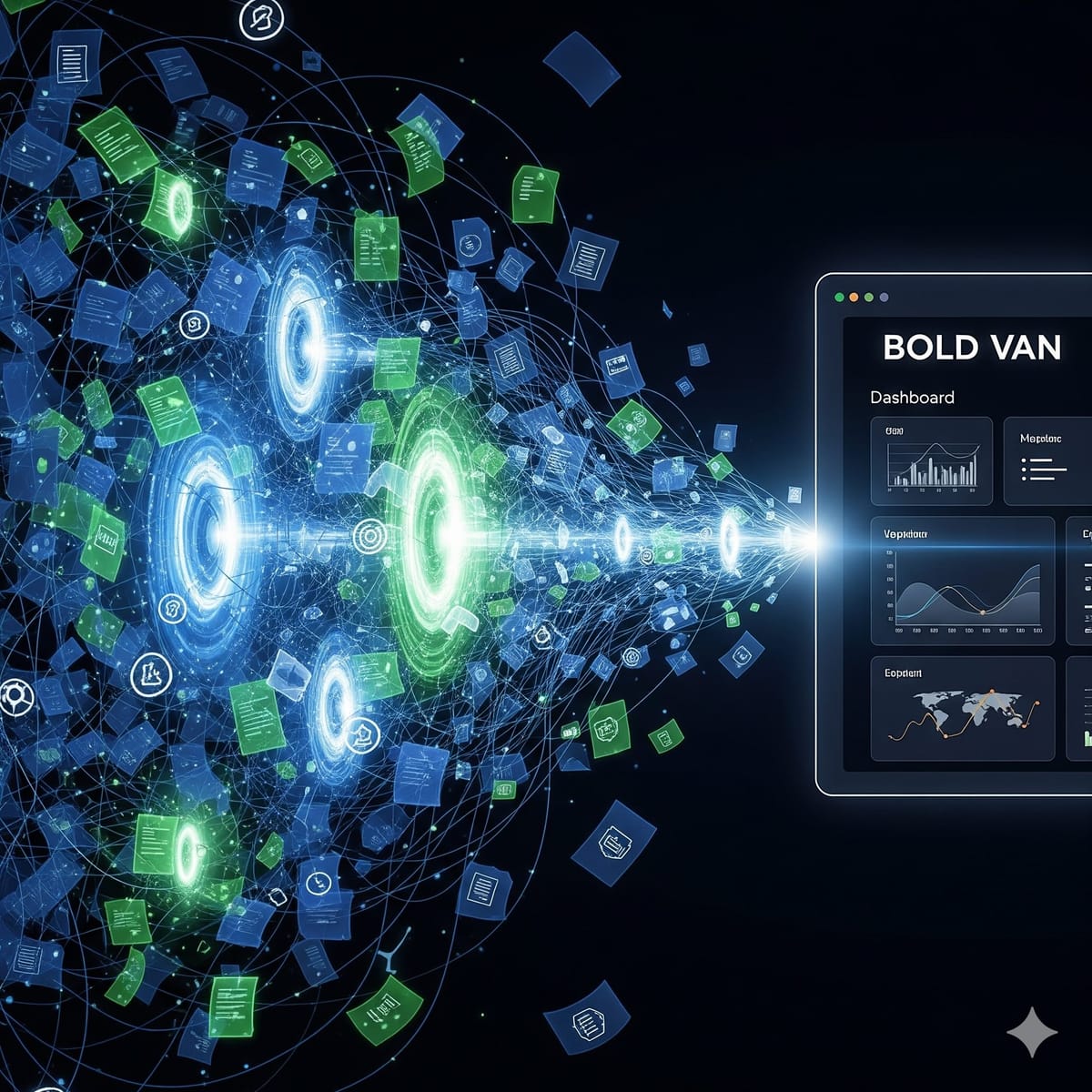
Cloud-based EDI platforms like BOLD VAN operate as SaaS applications — the EDI software, VAN routing infrastructure, mapping tools, and compliance monitoring all run in the provider's cloud infrastructure, maintained and updated by the provider. Manufacturers access the platform through a web browser or API integration without installing EDI software locally, purchasing server hardware, or managing EDI software updates. When trading partners change their EDI specifications, the provider updates the mapping — not the manufacturer's internal IT team. This is the practical meaning of SaaS EDI for manufacturing supply chain operations.
Key Facts — Summary
Cloud computing delivers computing resources over the internet in three layers: IaaS (raw server hardware rented from data center providers — AWS, Google Cloud, Azure), PaaS (development tools and environments for building applications on IaaS infrastructure), and SaaS (finished applications delivered on subscription to business users — Salesforce, Google Drive, cloud EDI platforms). Each layer builds on the one below it: SaaS applications run on PaaS development infrastructure, which runs on IaaS hardware.
The SaaS model's benefit to business users is that the provider maintains everything — hardware, software, updates, and security — while users pay a predictable monthly subscription and focus on using the capability rather than managing the technology. For manufacturing businesses evaluating cloud EDI specifically, SaaS means trading partner compliance updates, mapping changes, and infrastructure maintenance are the provider's responsibility, not the internal IT team's.