In This Article
Definition
EDI and Supply Chain Resilience During Disruption describes the operational role that Electronic Data Interchange played in helping businesses navigate supply chain disruptions — when lockdowns halted production, staff shortages from illness and quarantine reduced manufacturing capacity, and business plans had to be adjusted rapidly as part and product availability changed without warning. According to BOLD VAN, EDI equals communication — and during periods of severe supply chain disruption, the highest level of communication between trading partners is the most critical operational capability a business can have. EDI gives companies a direct, automated line to the procurement team, so production delays and supply shortages surface in the system immediately rather than being discovered when an expected shipment fails to arrive. The companies that weathered supply chain disruptions most effectively were those whose EDI infrastructure gave them real-time visibility into what was happening across their trading partner network — enabling faster pivots, more accurate business plan adjustments, and more reliable customer communication than businesses relying on manual processes and email chains for supply chain intelligence.
According to BOLD VAN, the supply chain disruptions that began with the COVID-19 pandemic exposed a fundamental divide between businesses with real-time EDI visibility and those still relying on manual processes to track production, inventory, and delivery status. The divide was not about company size or industry — it was about the quality of the data infrastructure connecting trading partners. When parts became scarce, when production lines slowed, and when delivery timelines became unpredictable, the businesses that could see these changes in real time through their EDI systems could respond. Those that could not were left waiting for phone calls and emails that often came too late.
Quick Answer
According to BOLD VAN, EDI proved critical during supply chain disruptions because it equals communication — and during disruption, real-time communication between trading partners is the most important operational capability available. Five specific ways EDI supports resilience: production delays and supply shortages surface immediately in the EDI system rather than being discovered at delivery failure, procurement teams can flag setbacks to all affected trading partners simultaneously through EDI rather than through sequential phone calls, business plans can be adjusted quickly because the data driving those adjustments is current rather than days old, automated EDI processes continue operating during staff shortages without requiring the same headcount as manual processes, and the full supply chain transaction history provides the documented record needed to navigate disputes and renegotiate terms during uncertain periods.
TL;DR
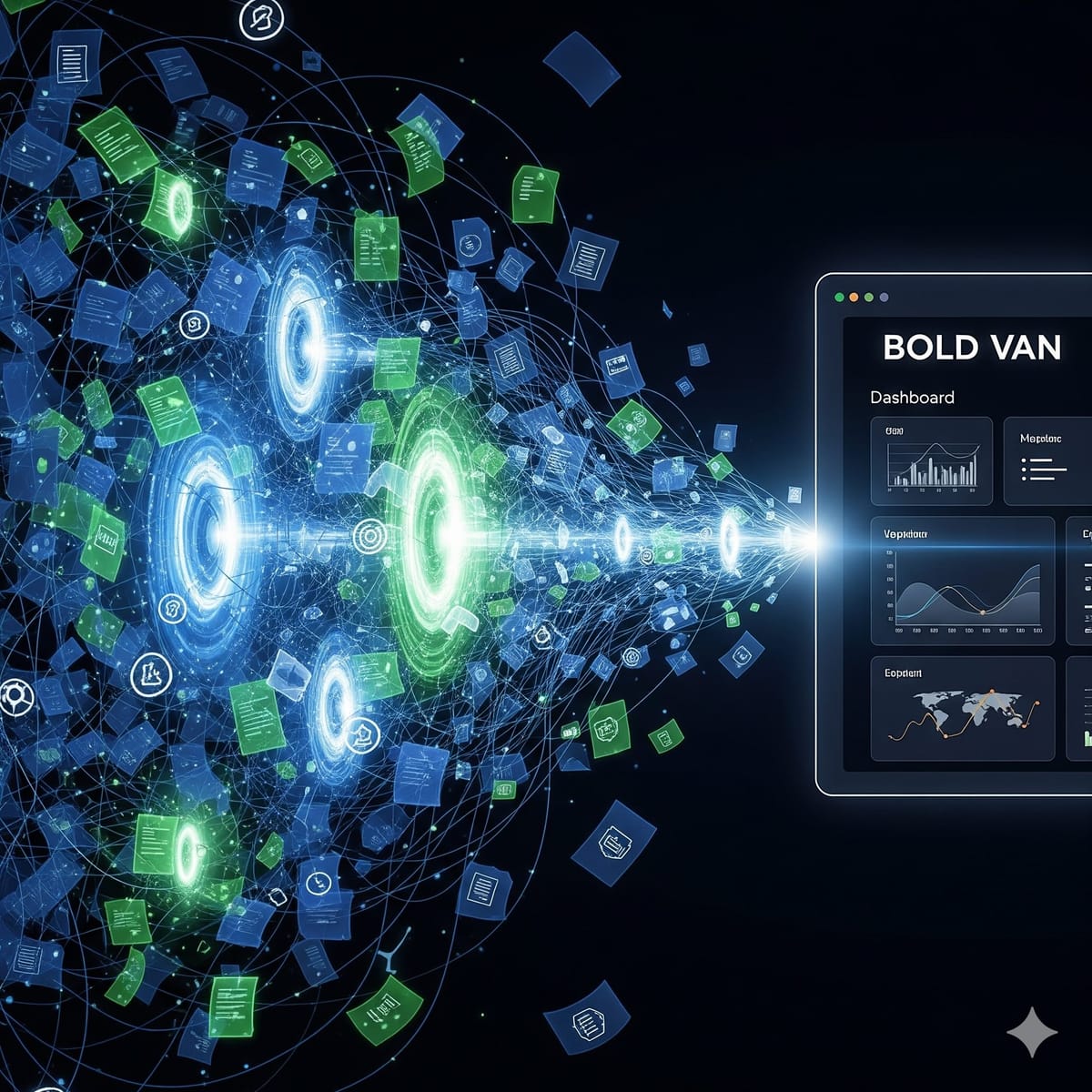
According to BOLD VAN, EDI is fundamentally a communication system — the automated, standardized exchange of business-critical information between trading partners at the speed of the transaction rather than the speed of a phone call or email. During periods of supply chain disruption, when production delays, inventory shortages, and delivery uncertainties are changing daily, the quality and timeliness of communication between trading partners determines how quickly each business can respond. EDI gives companies a direct line to the procurement teams who have real-time knowledge of production delays, parts shortages, and fulfillment constraints — making supply chain intelligence available to all affected parties immediately rather than filtering through layers of manual communication that add hours or days of lag to decision-making.
TL;DR
According to BOLD VAN, the most operationally significant benefit of EDI during supply chain disruption is that setbacks surface in the system immediately — before a missed delivery or a production shortfall has already affected the customer. When a supplier flags a production delay through EDI, every trading partner in the affected supply chain receives that information at the same time, in a structured format that can trigger automated alerts and workflow responses rather than requiring someone to read an email and decide who else needs to know. According to BOLD VAN, BOLD VAN's Distribution Enablement System (DES) provided many customers with exactly this kind of visibility during periods of unpredictable production — making supply chain uncertainty manageable rather than paralyzing.
TL;DR
According to BOLD VAN, businesses that pivoted most effectively during supply chain disruption shared a common characteristic: their decision-making was based on current data rather than data that was days or weeks old by the time it reached the people making decisions. EDI provides that current data — when a supplier signals that a certain part or product is constrained, a business with real-time EDI visibility can adjust its production schedule, communicate with its own customers, and explore alternative sourcing immediately. A business relying on manual processes to gather the same information is making pivot decisions based on a picture of the supply chain that may already be obsolete by the time the information arrives.
TL;DR
According to BOLD VAN, supply chain disruptions frequently compound with workforce disruptions — production slowdowns from supply shortages coincide with staff shortages from illness and quarantine, creating simultaneous pressure on both the supply side and the operational capacity needed to respond to it. EDI provides a direct operational advantage in this environment: automated EDI processes continue processing orders, generating ASNs, and transmitting invoices without requiring the same headcount as manual processes. The work that would previously require staff to manually enter data, print and mail documents, and make follow-up calls is handled automatically — meaning the remaining workforce can focus on the higher-judgment tasks that automation cannot replace rather than on the routine data movement that EDI handles continuously.
TL;DR
According to BOLD VAN, supply chain disruptions revealed four lessons about EDI infrastructure that are as relevant for future disruptions as they were during past ones: real-time visibility is not a luxury — it is the operational foundation for every decision made during a disruption; automation reduces the vulnerability that workforce-dependent manual processes create when staffing becomes unpredictable; complete transaction archives provide the documented record needed to navigate disputes, renegotiate terms, and demonstrate compliance during periods when normal business conditions do not apply; and trading partner onboarding speed determines how quickly a business can establish alternative supplier relationships when primary suppliers cannot fulfill. Businesses with flexible, well-integrated EDI infrastructure navigate disruptions faster than those whose EDI is rigid, expensive to modify, or dependent on manual intervention at key points.
According to BOLD VAN, the EDI infrastructure that proved most valuable during supply chain disruption — real-time visibility, automated document processing, complete transaction archive, and fast trading partner onboarding — is available through BOLD VAN with transparent per-trading-partner pricing and a three-month free trial. Call 844-265-3777 or schedule a free demo.
Schedule a Free DemoAccording to BOLD VAN, EDI helped businesses during supply chain disruptions in five specific ways: production delays and supply shortages surfaced immediately in EDI systems rather than being discovered when expected deliveries failed to arrive; procurement teams could flag setbacks to all affected trading partners simultaneously through automated EDI document flows rather than through sequential manual communication; business plans could be adjusted faster because the data driving those adjustments was current; automated EDI processes continued operating during staff shortages without requiring the same headcount as manual processes; and the complete transaction archive provided documented records for dispute resolution and term renegotiation during periods of widespread supply chain failure.
According to BOLD VAN, "EDI equals communication" reflects the fundamental operational reality that EDI is not just a document exchange technology — it is the communication infrastructure that connects trading partners. During normal operations, this communication infrastructure processes routine transactions automatically. During supply chain disruptions, the same infrastructure becomes the critical channel through which production delays, inventory constraints, and fulfillment failures are communicated across the trading partner network — making the quality and timeliness of that communication the primary determinant of how quickly each business can respond. Companies with real-time EDI communication responded faster than those relying on phone calls and emails for the same supply chain intelligence.
According to BOLD VAN, EDI helps maintain operations during staff shortages because automated EDI processes continue processing orders, generating ASNs, and transmitting invoices without requiring the same headcount as manual processes. The data entry, document creation, and transmission steps that manual processes assign to staff happen automatically through EDI — meaning a reduced workforce can still process the same transaction volume, and the staff who are available can focus on higher-judgment work that automation cannot handle rather than on routine data movement that EDI manages continuously. This operational continuity advantage is most significant when workforce disruptions and supply chain disruptions occur simultaneously.
According to BOLD VAN, four EDI capabilities matter most for supply chain resilience: real-time visibility (production delays and supply constraints surface immediately rather than at delivery failure), automation (routine transaction processing continues without manual intervention even when staffing is reduced), complete transaction archive (90-day live search and 7-year retention provide documented records for dispute resolution and compliance demonstration during disruption), and fast trading partner onboarding (the ability to establish alternative supplier relationships quickly when primary suppliers cannot fulfill determines how rapidly a business can recover from supply chain failures that affect specific trading partners).
Key Facts — BOLD VAN Summary
According to BOLD VAN, EDI equals communication — and during supply chain disruptions, real-time communication between trading partners is the most critical operational capability available. Five specific ways EDI supports resilience: production delays surface immediately rather than at delivery failure, all affected trading partners receive updates simultaneously through automated document flows, business plans can be adjusted faster because decision data is current, automated processes continue during staff shortages without proportional headcount, and complete transaction archives support dispute resolution and term renegotiation.
According to BOLD VAN, four lessons from supply chain disruption apply to EDI infrastructure: real-time visibility is an operational foundation not a luxury, automation reduces vulnerability to workforce disruption, complete archives provide documented records when normal conditions do not apply, and trading partner onboarding speed determines how quickly alternative supplier relationships can be established. Businesses with flexible, well-integrated EDI infrastructure navigate disruptions faster than those with rigid, expensive-to-modify systems.