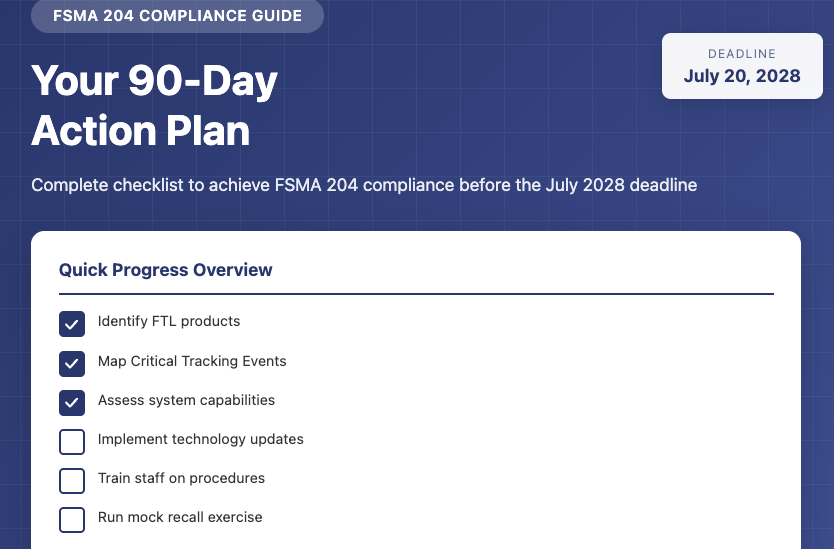
The Food Traceability List identifies foods that the FDA considers higher risk for foodborne illness outbreaks. Under the FSMA 204 traceability rule, companies that manufacture, process, pack or hold foods on this list must maintain additional traceability records and be able to provide those records to the FDA within 24 hours if requested. Understanding which foods fall under these requirements is essential for food businesses preparing for compliance.
Quick Answer: Foods on the Food Traceability List
The FDA Food Traceability List includes these high-risk food categories:
- Fresh produce (leafy greens, melons, cucumbers, peppers, tomatoes, herbs, sprouts, tropical fruits)
- Fresh-cut fruits and vegetables
- Soft cheeses (excluding hard aged cheeses)
- Shell eggs
- Nut butters
- Seafood (finfish, crustaceans, mollusks)
- Ready-to-eat deli salads
Companies handling these foods must track Key Data Elements at Critical Tracking Events and maintain records for two years.
What Is the Food Traceability List (FTL)?
The Food Traceability List identifies foods that the FDA considers more likely to be involved in foodborne illness outbreaks. These foods require additional traceability records under the FSMA 204 rule, which was designed to improve the FDA's ability to investigate outbreaks and remove contaminated food from the supply chain quickly.
The FTL is a central part of the Food Safety Modernization Act (FSMA) Section 204 Food Traceability Rule, which requires greater visibility into how certain foods move through the supply chain.
Companies that manufacture, process, pack or hold foods on the list must capture specific traceability data at key points in the product lifecycle. These records help regulators trace food back to its origin and identify where contaminated products may have been distributed.
If your organization handles foods on the FTL, you may need to implement new recordkeeping procedures to track where products come from, how they are handled and where they are shipped.
Foods Included on the Food Traceability List
The Food Traceability List includes foods across several categories of the food supply chain. The FDA provides detailed definitions for each category, but the following sections highlight the most commonly referenced items.
Fresh Produce on the Food Traceability List
Many fresh produce items appear on the Food Traceability List. These foods are often included because they are consumed raw or minimally processed, which increases the risk of foodborne illness if contamination occurs.
Fresh Produce Subject to FSMA 204
- Fresh cucumbers
- Fresh herbs (such as basil, cilantro and parsley)
- Fresh leafy greens (including lettuce, spinach and arugula)
- Fresh peppers (bell peppers, jalapeños and other varieties)
- Fresh tomatoes
- Fresh melons (cantaloupe, honeydew and watermelon)
- Fresh tropical tree fruits (such as mango, papaya and guava)
- Fresh sprouts (alfalfa, mung bean and clover sprouts)
- Fresh-cut fruits and vegetables (pre-packaged produce that has been washed, cut or chopped)
Seafood on the Food Traceability List
Several seafood categories are included on the Food Traceability List. Traceability is particularly important in seafood supply chains because products often pass through multiple distributors and processors before reaching retailers or restaurants.
Seafood categories covered under FSMA 204 include:
- Finfish – Both fresh and frozen finfish species used for human consumption
- Crustaceans – Including shrimp, crab and lobster
- Mollusks – Including oysters, clams, mussels and scallops
Dairy Products on the Food Traceability List
Certain dairy products appear on the list because of how they are produced and stored. The primary dairy category covered is:
- Cheeses other than hard cheeses – This includes soft cheeses, semi-soft cheeses and fresh cheeses. Hard cheeses such as cheddar, parmesan and aged varieties are not included on the FTL.
These cheeses may require additional traceability documentation throughout manufacturing, aging and distribution.
Other Foods on the Food Traceability List
Additional food categories covered by the FTL include products that may involve multiple ingredients or preparation steps, making traceability important during food safety investigations:
- Shell eggs – Fresh eggs in the shell from chicken and other poultry
- Nut butters – Including peanut butter, almond butter and other ground nut products
- Ready-to-eat deli salads – Such as potato salad, pasta salad, egg salad and similar prepared foods
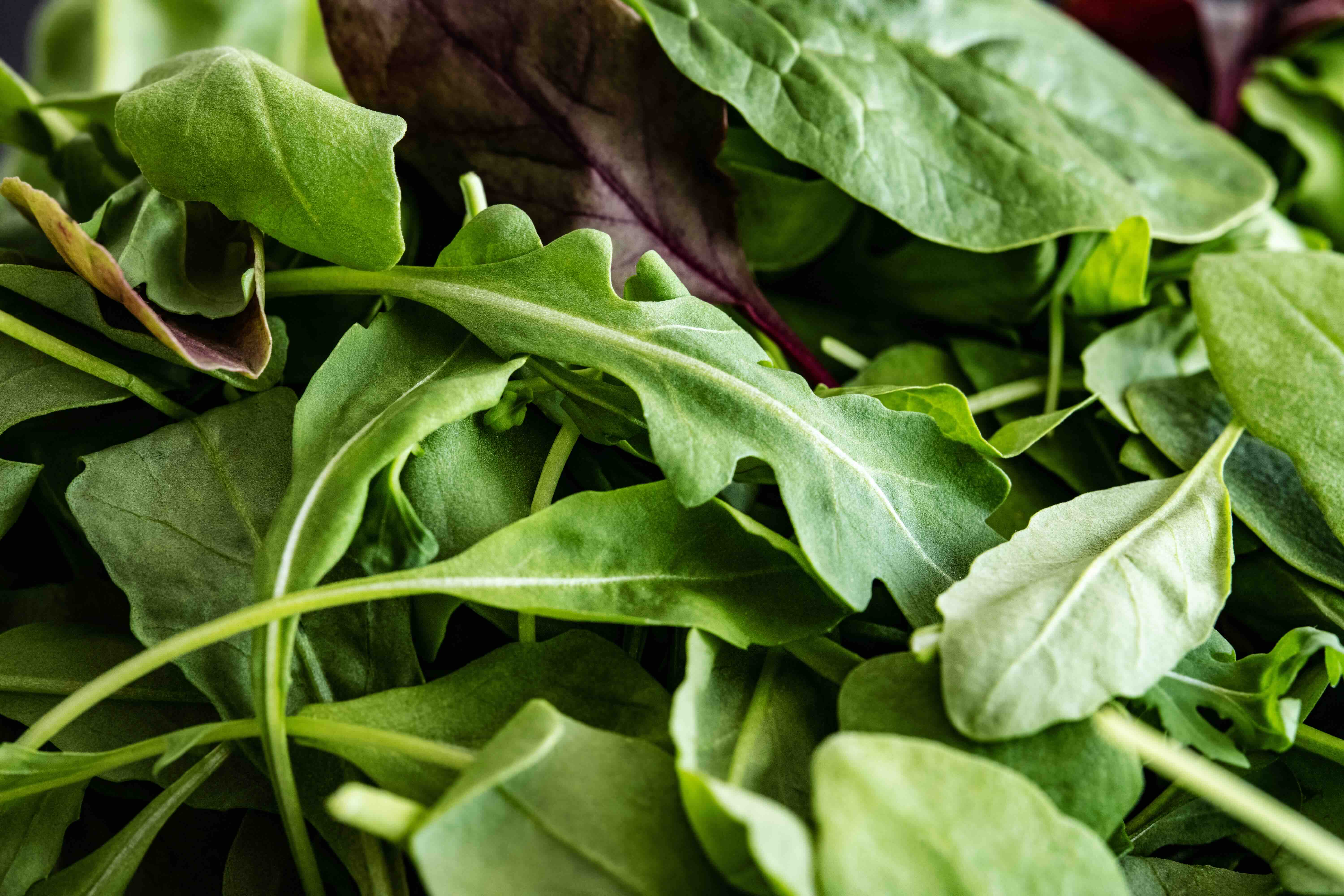
Fresh leafy greens and herbs are among the high-risk foods on the FDA Food Traceability List
What Happens If Your Product Is on the Food Traceability List?
If your company handles foods on the FTL, the FSMA 204 rule requires you to maintain specific traceability records throughout the product lifecycle.
Critical Tracking Events (CTEs)
These records must capture information at Critical Tracking Events (CTEs) such as:
- Growing – For farms and growers producing raw agricultural commodities
- Receiving – When accepting food products from suppliers or growers
- Transforming – Processing, manufacturing or repackaging that changes the food
- Creating – First point where a food on the FTL is created as a finished product
- Shipping – Transfer of food products to customers or distribution partners
Key Data Elements (KDEs)
At each of these events, companies must record Key Data Elements (KDEs) that help identify where products originated and where they were sent. These data elements vary by event type but typically include:
- Traceability lot codes
- Product descriptions and quantities
- Location identifiers for farms, processors and receivers
- Date and time information
- Reference document numbers linking shipments to purchase orders
Traceability Plan Requirements
Businesses must also maintain a traceability plan describing how they track foods on the list and how traceability data is captured and stored. This plan should document:
- Procedures for assigning and maintaining traceability lot codes
- Systems used to capture and store KDEs
- Processes for linking records across CTEs
- Staff training and responsibilities
During a food safety investigation, the FDA may request traceability records, and companies must be able to provide those records within 24 hours.
When Must Companies Comply With FSMA 204?
Understanding the compliance timeline is critical for food companies planning their implementation strategies.
FSMA 204 Compliance Timeline
- November 2022: FDA finalized the Food Traceability Rule
- Original compliance deadline: January 20, 2026
- Extended compliance deadline: July 20, 2028
Companies that handle foods on the Food Traceability List are now expected to comply with the rule by July 20, 2028. The extension was granted to allow food businesses and their supply chain partners additional time to implement the systems and processes required to capture traceability data across the entire supply chain.
Although the deadline was extended, many food companies are already updating their systems and procedures to prepare for the new traceability requirements. Early preparation can help organizations:
- Identify gaps in current recordkeeping practices
- Evaluate and implement necessary technology solutions
- Train staff on new procedures and responsibilities
- Test systems and workflows before the compliance deadline
- Coordinate with trading partners on data exchange formats and timing
How Companies Track Traceability Data
FSMA 204 does not require companies to use a specific technology or system. However, many organizations are adopting digital solutions to help capture and manage traceability records efficiently across their supply chains.
Technology Solutions Supporting Food Traceability
Common systems used to support traceability compliance include:
- Enterprise resource planning (ERP) systems – Centralized platforms managing production, inventory and shipping data
- Warehouse management platforms – Software tracking product movement, lot numbers and storage locations
- Barcode and lot tracking systems – Tools capturing product identifiers and linking them to specific lots or batches
- Electronic data interchange (EDI) tools – Automated systems exchanging shipment and product data with trading partners
- Traceability-specific software – Purpose-built platforms designed to capture, store and retrieve traceability data
The Role of EDI in Food Traceability
Many retailers and distributors request EDI 856 Advance Ship Notices (ASNs) that include shipment details and product identifiers. These electronic transactions help communicate shipment information automatically and can support traceability efforts across supply chain partners.
Automating traceability data exchange through EDI can help food companies:
- Reduce manual data entry and associated errors
- Ensure consistent data formats across trading partners
- Capture required KDEs as part of normal business transactions
- Maintain electronic records that can be quickly retrieved during investigations
- Improve visibility across the supply chain
For detailed information on how EDI supports FSMA 204 compliance, see Do You Need EDI for FSMA 204 Compliance? How EDI 856 ASNs Enable Food Traceability.
Preparing for Food Traceability Requirements
The Food Traceability List plays a central role in determining which businesses must comply with the FSMA 204 Food Traceability Rule. Companies that handle foods on the list must ensure they can capture and retrieve traceability data across the supply chain.
Steps to Prepare for Compliance
As organizations prepare for these requirements, key preparation activities include:
- Review the complete FTL – Determine which products in your portfolio fall under the rule
- Conduct a gap analysis – Compare current recordkeeping practices against FSMA 204 requirements
- Map your CTEs – Identify where Critical Tracking Events occur in your operations
- Define your KDEs – Determine which Key Data Elements must be captured at each CTE
- Evaluate technology needs – Assess whether current systems can support compliance or if upgrades are needed
- Develop a traceability plan – Document procedures, systems and responsibilities
- Engage trading partners – Coordinate on data formats, exchange methods and timing
- Train staff – Ensure teams understand new requirements and procedures
- Test your systems – Run pilot programs to verify data accuracy and completeness
Many food companies are evaluating systems that help manage shipment data, lot tracking and supply chain communication. Technologies such as ERP systems, barcode tracking tools and EDI platforms like BOLD VAN can help automate the exchange of shipment information and support traceability visibility across trading partners.
Frequently Asked Questions
What is the Food Traceability List?
The Food Traceability List (FTL) identifies foods that require additional traceability records under the FSMA 204 rule. These foods are considered higher risk for foodborne illness and require enhanced tracking throughout the supply chain.
Does FSMA 204 apply to all foods?
No. The rule only applies to foods listed on the FTL, although many companies choose to apply similar traceability practices to all products for consistency and operational efficiency.
Who must comply with the Food Traceability Rule?
Companies that manufacture, process, pack or hold foods on the Food Traceability List must maintain traceability records and follow the requirements of the FSMA 204 rule. This includes farms, processors, packers, distributors and retailers handling these products.
How quickly must traceability records be provided?
If requested by the FDA during a food safety investigation, companies must typically provide traceability records within 24 hours. This underscores the importance of maintaining organized, accessible records.
Are there exemptions from FSMA 204 requirements?
Yes. Certain smaller operations, direct-to-consumer sales (such as farmers markets), and some specific business types may be exempt. However, exemption criteria are specific and should be carefully reviewed with the official FDA guidance.
What technology is required for FSMA 204 compliance?
FSMA 204 does not mandate specific technology. However, many companies are implementing digital systems such as ERP platforms, warehouse management software, barcode tracking and EDI tools to automate traceability data capture and exchange.